Sources
Archival sources we use to research Polish ancestry — what they are, where to find them, and what they tell you about your family.
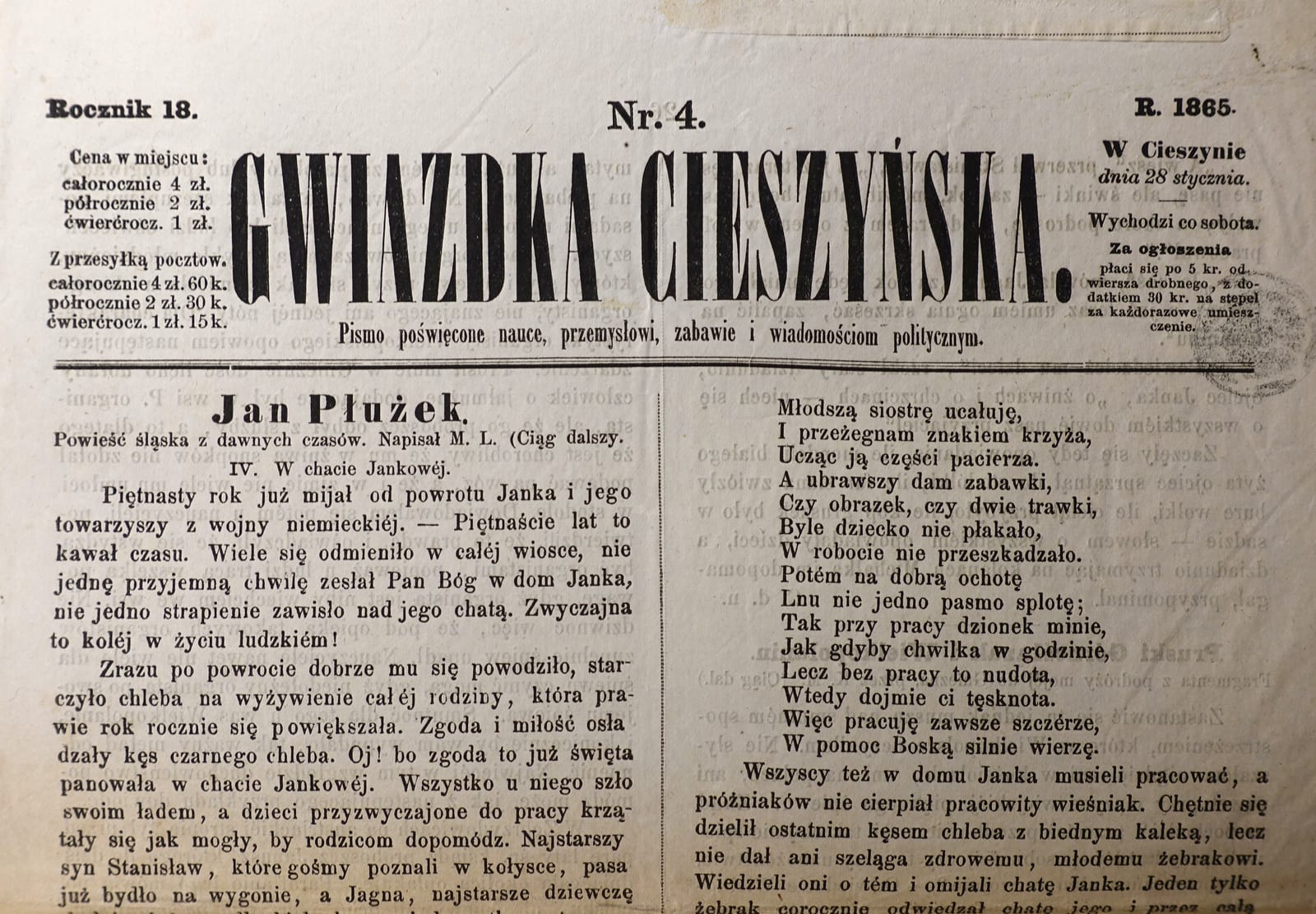
Historical newspaper search
Obituaries, marriage announcements, court notices, business advertisements — Polish, German, and Austrian newspapers from the 19th and early 20th centuries are searchable in regional digital libraries.
Read more →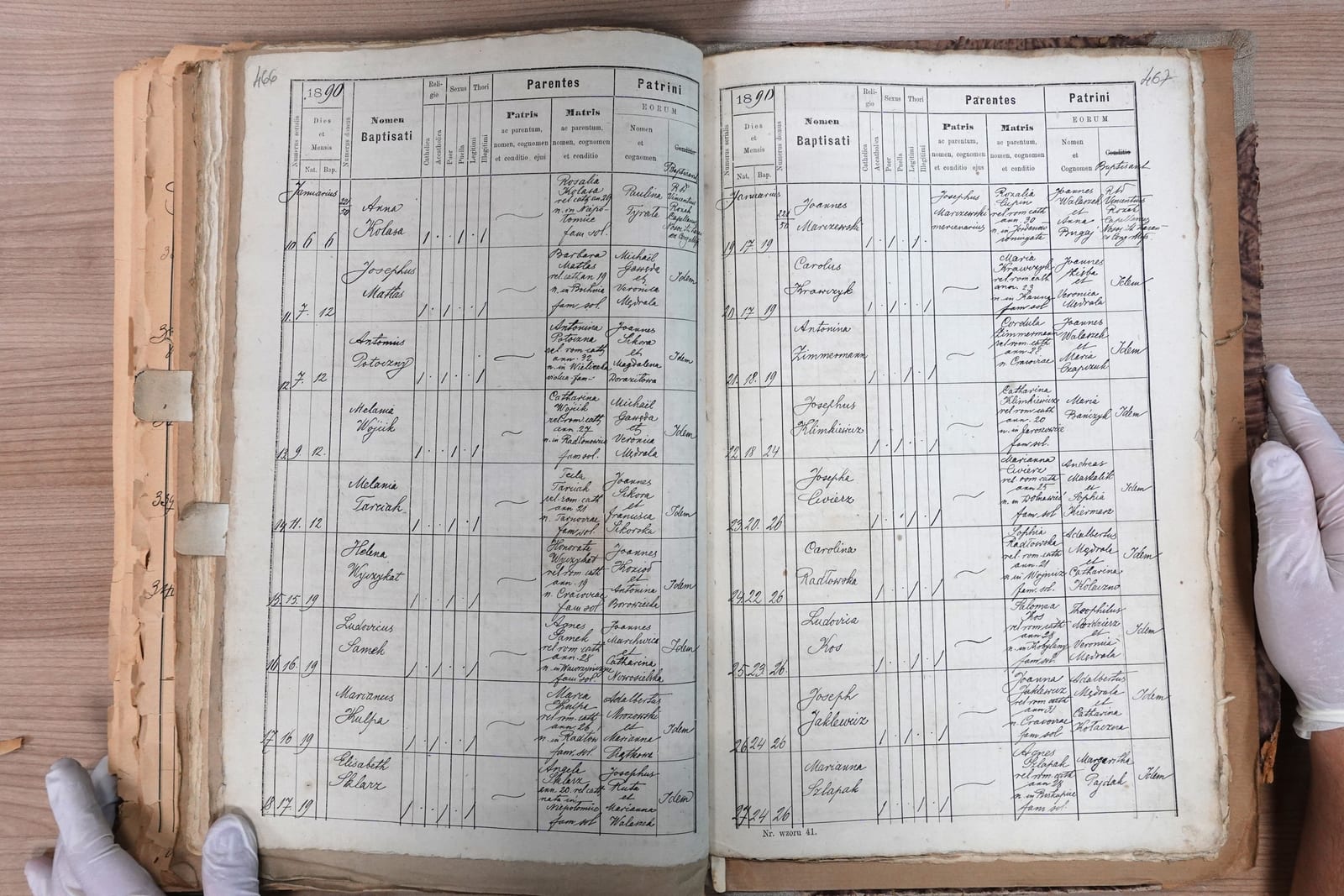
Vital records (births, marriages, deaths)
The foundation of any genealogical research — parish and civil registers documenting births, marriages, and deaths, often the only surviving evidence of a person’s existence.
Read more →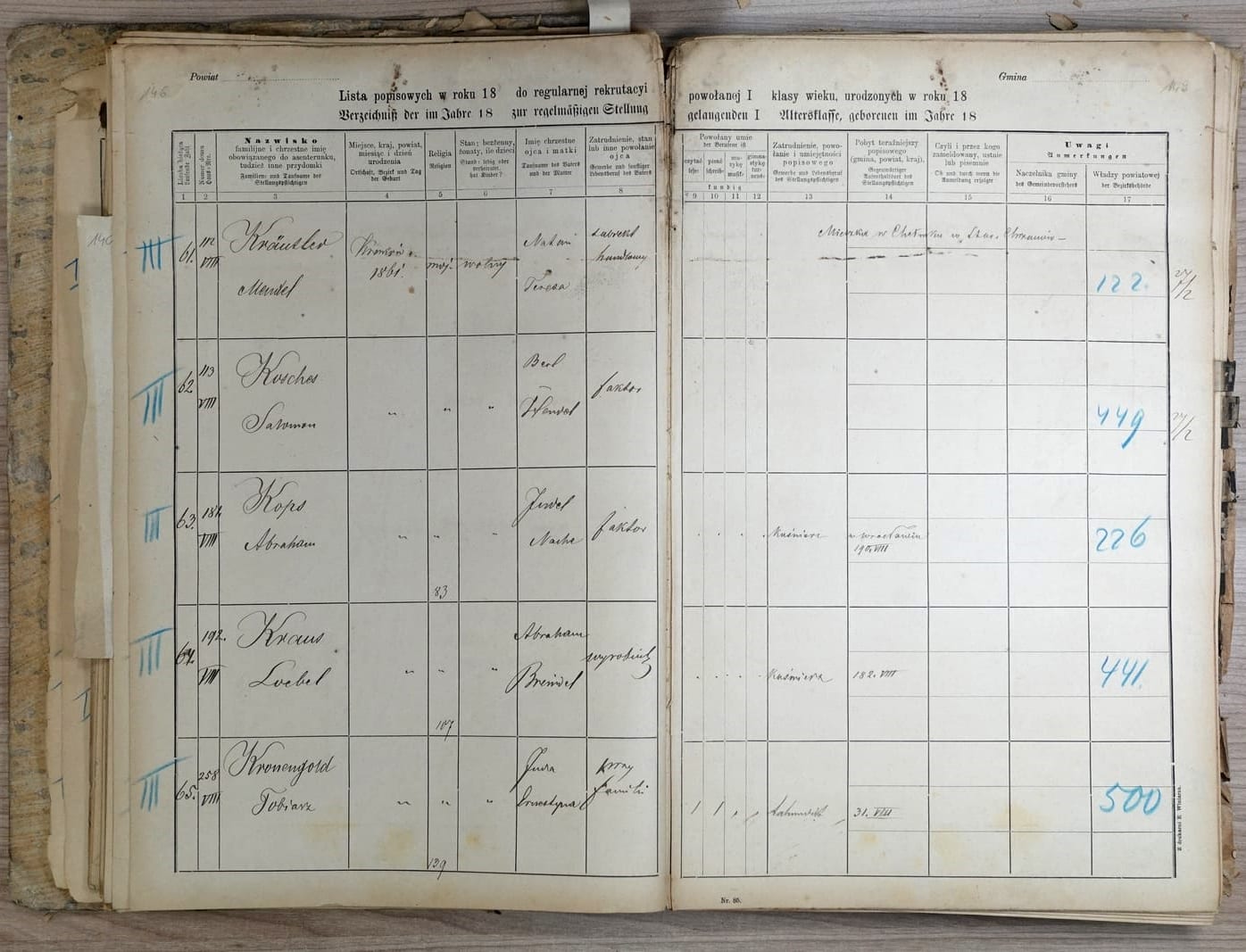
Military records
Conscription lists, regimental rolls, casualty registers, and personal service files from the Austrian, Prussian, Russian, and Polish armies — a rich source of biographical detail.
Read more →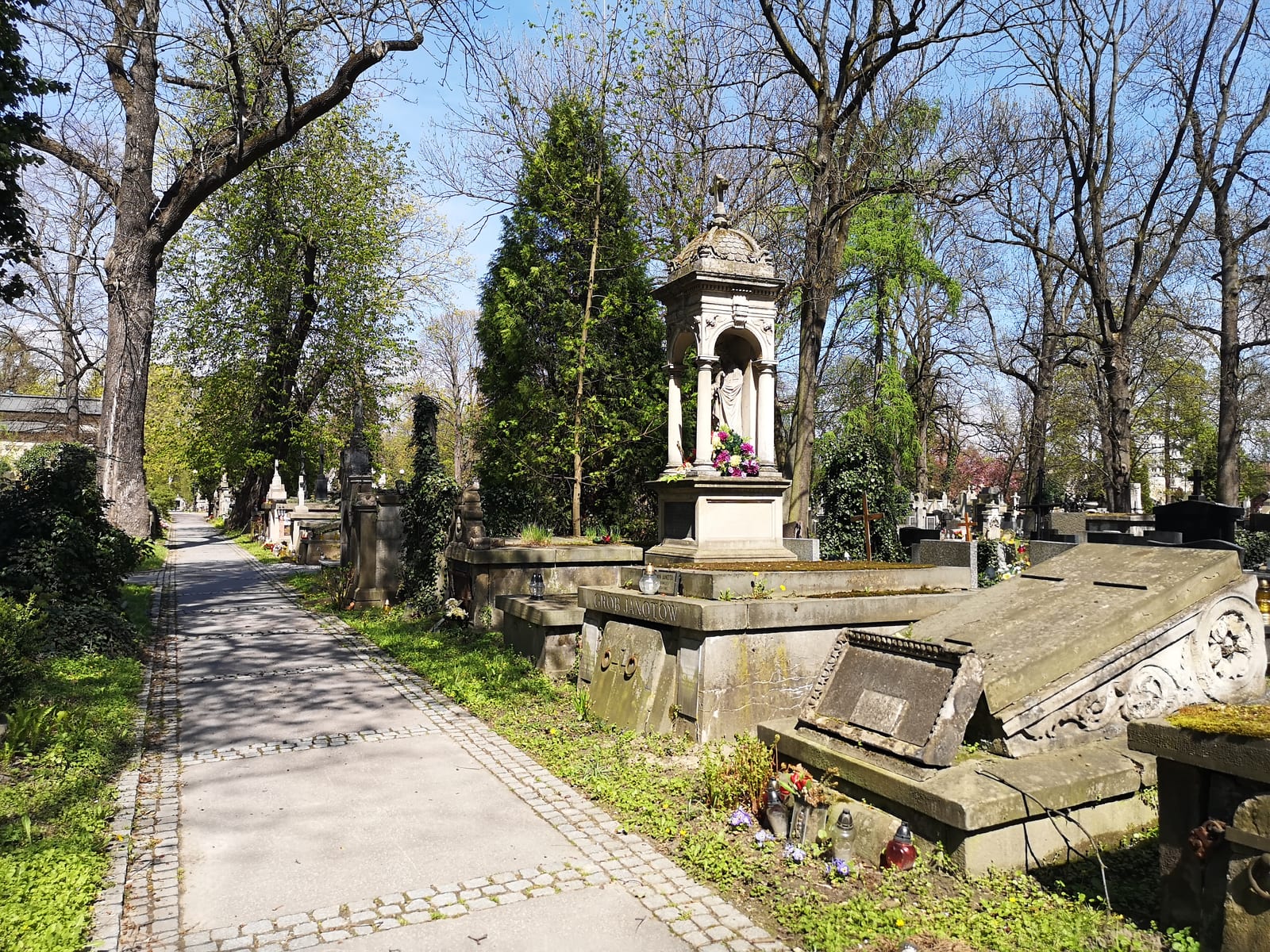
Cemeteries
Tombstone inscriptions, cemetery books, and burial registers preserve names, dates, and family relationships that often did not make it into parish records.
Read more →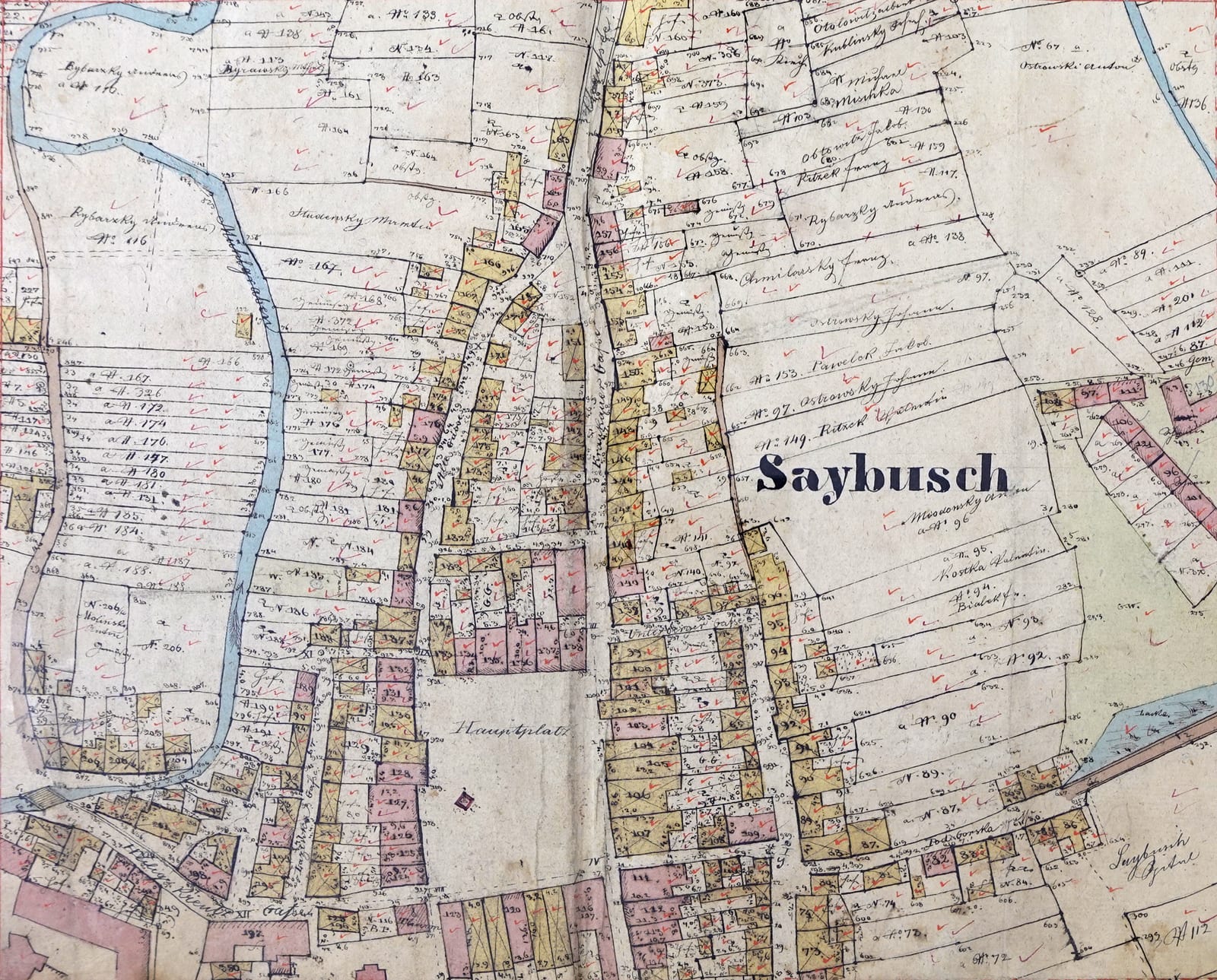
Cadastral records
Maps, parcel registers, and ownership protocols compiled in the 19th century for taxation purposes — they let us locate the exact house where your ancestors lived.
Read more →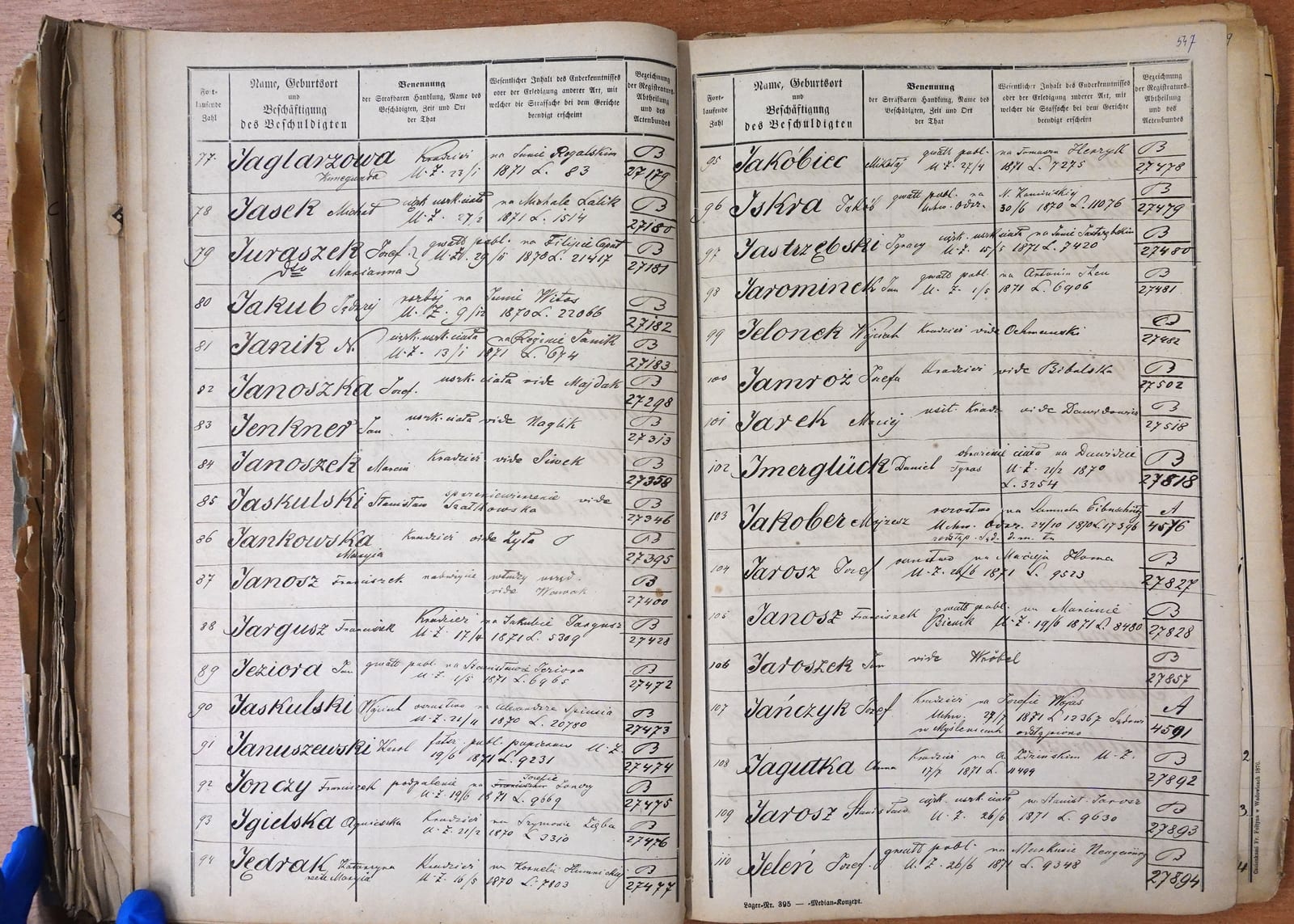
Court records
Inheritance proceedings, land disputes, criminal cases, and guardianship files — court archives often preserve detailed family information not found anywhere else.
Read more →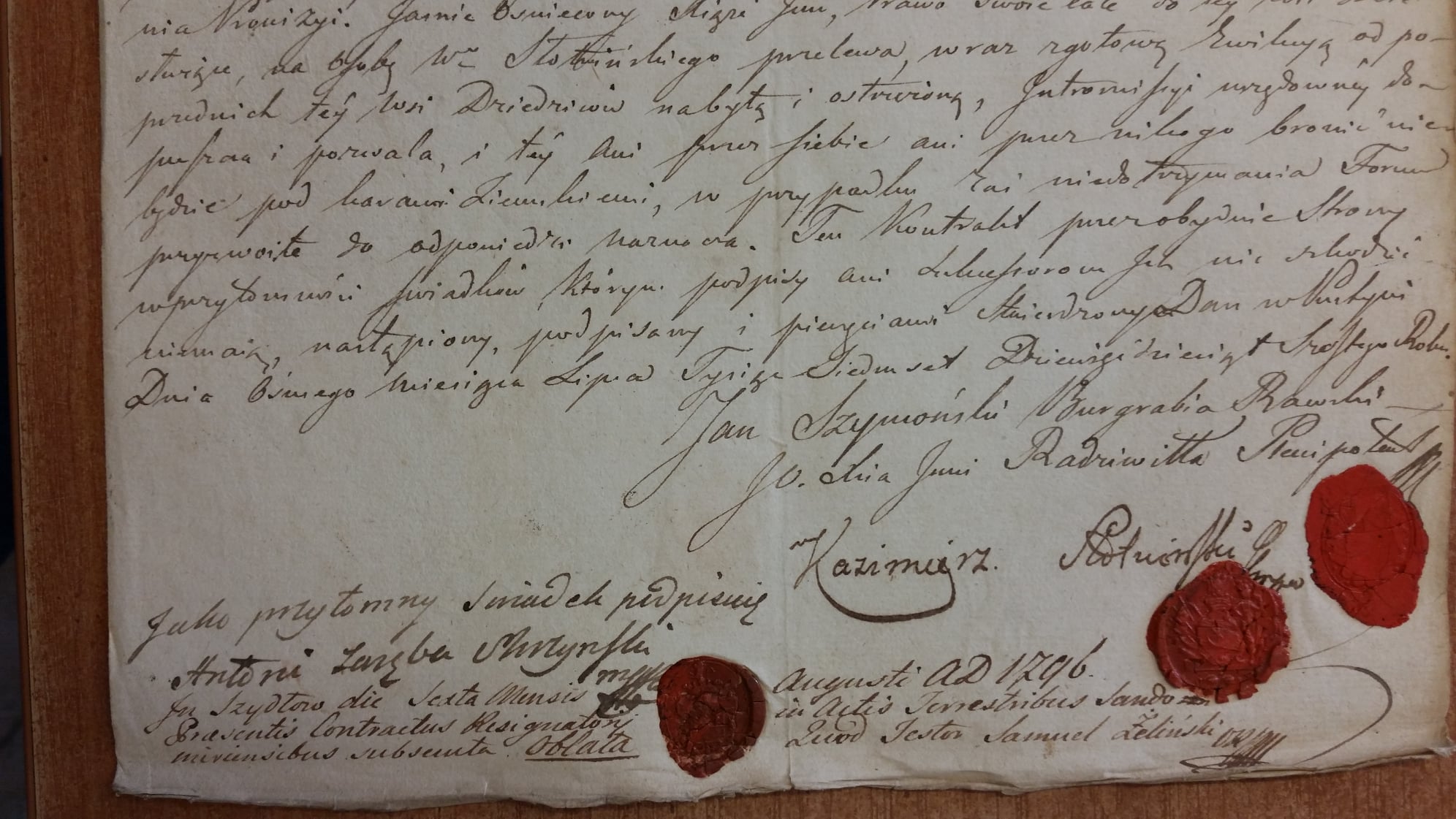
Nobility records
Were your ancestors noble? Polish nobility registers, land books, and deeds — sealed and signed — survive in the archives.
Read more →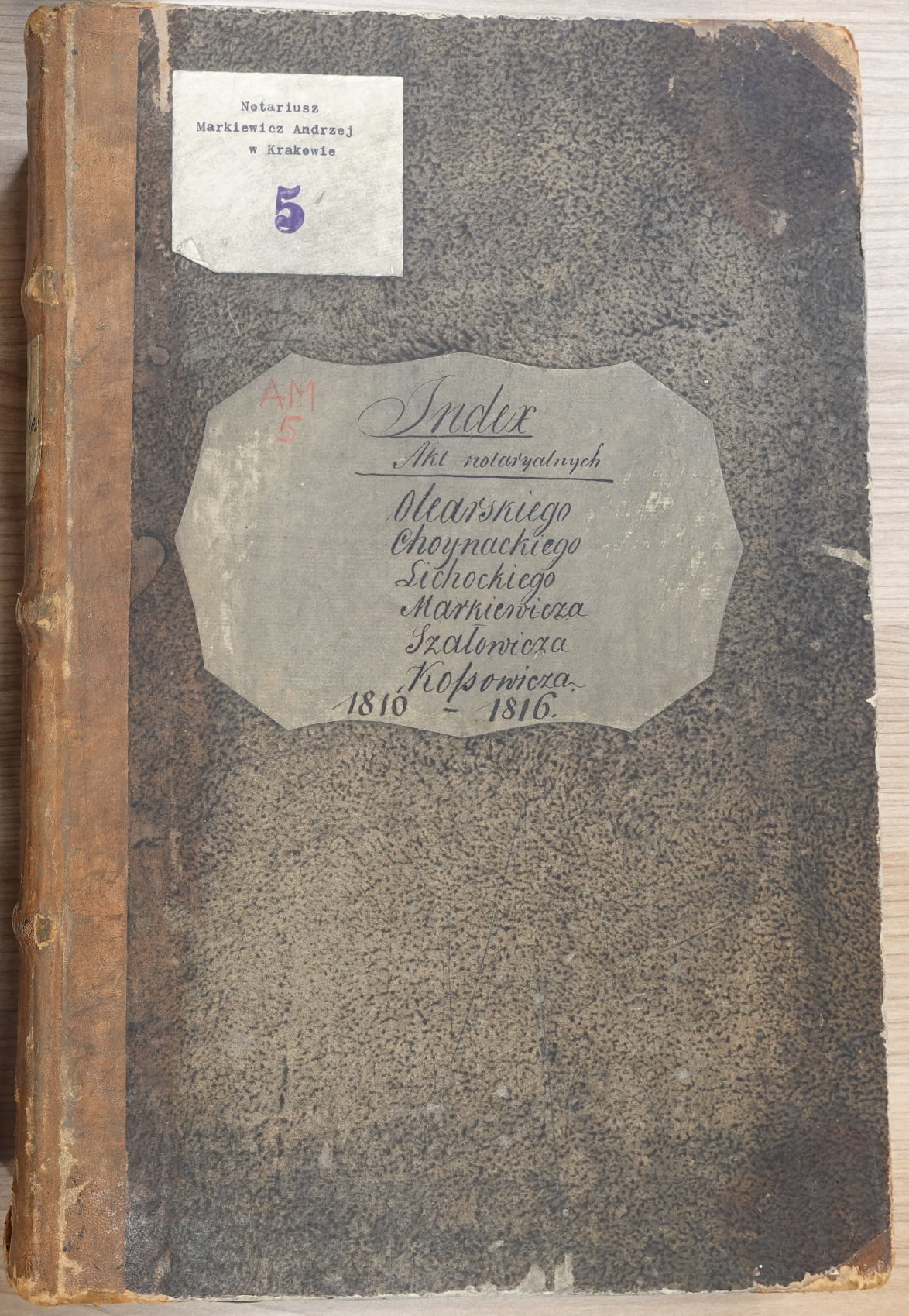
Kraków's notary records from 1810
Kraków's notary records begin in 1810 and appear to be complete — a rich source for tracing ancestors who lived in the city during the early 19th century.
Read more →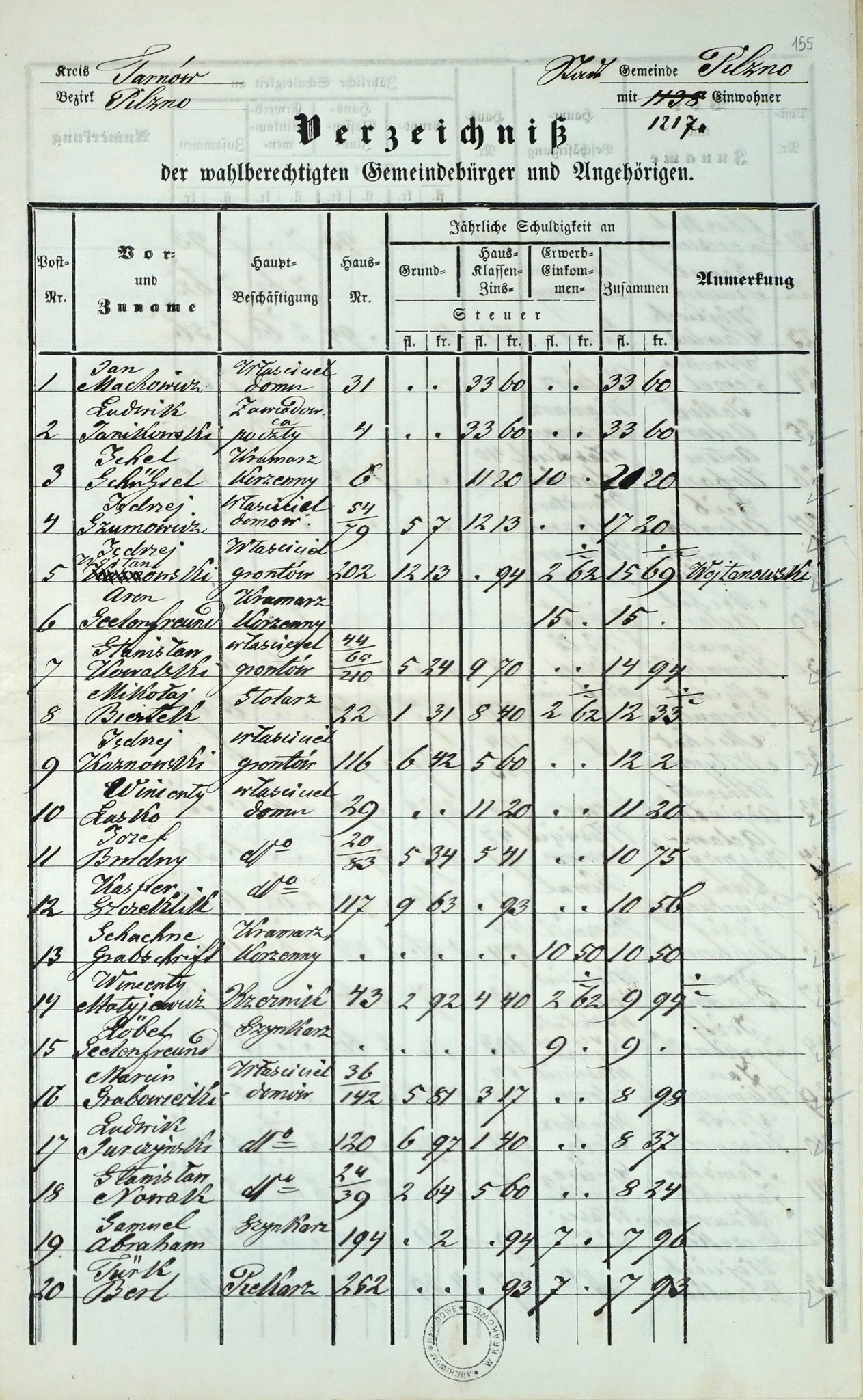
Voter lists
An important but often overlooked archival source for many towns and villages in Galicia, held at the National Archive in Krakow.
Read more →Census records (for selected locations)
Population counts and household lists from the Austrian, Prussian, and later Polish administrations — surviving unevenly, but a goldmine when they do.
Read more →Address books and phonebooks
Annual directories of city dwellers, tradesmen, and (later) telephone subscribers — they pin a person to a specific address in a specific year.
Read more →Education sources (primary schools, gimnazja, universities)
Primary-school class registers, gimnazjum (classical secondary-school) catalogues, matura records, and university enrollment books — invaluable for tracing the educational and social path of an ancestor.
Read more →Concentration camps and POW camps
Records of those imprisoned in Nazi and Soviet camps — names, dates, transports, and fates — held by the International Tracing Service (Arolsen), Auschwitz Museum, and other institutions.
Read more →Village court records (księgi sądowe wiejskie)
A unique Polish source — the proceedings of village courts (16th–18th century) recording land sales, inheritance disputes, marriage contracts and conflicts among peasants. Often the only pre-19th-century source for non-noble ancestors.
Read more →Land records
Mortgage and land registers (księgi hipoteczne, gruntowe) maintained by district courts — they record owners, transactions, debts, and inheritance of real estate from the early 19th century onward.
Read more →
Archives we work in
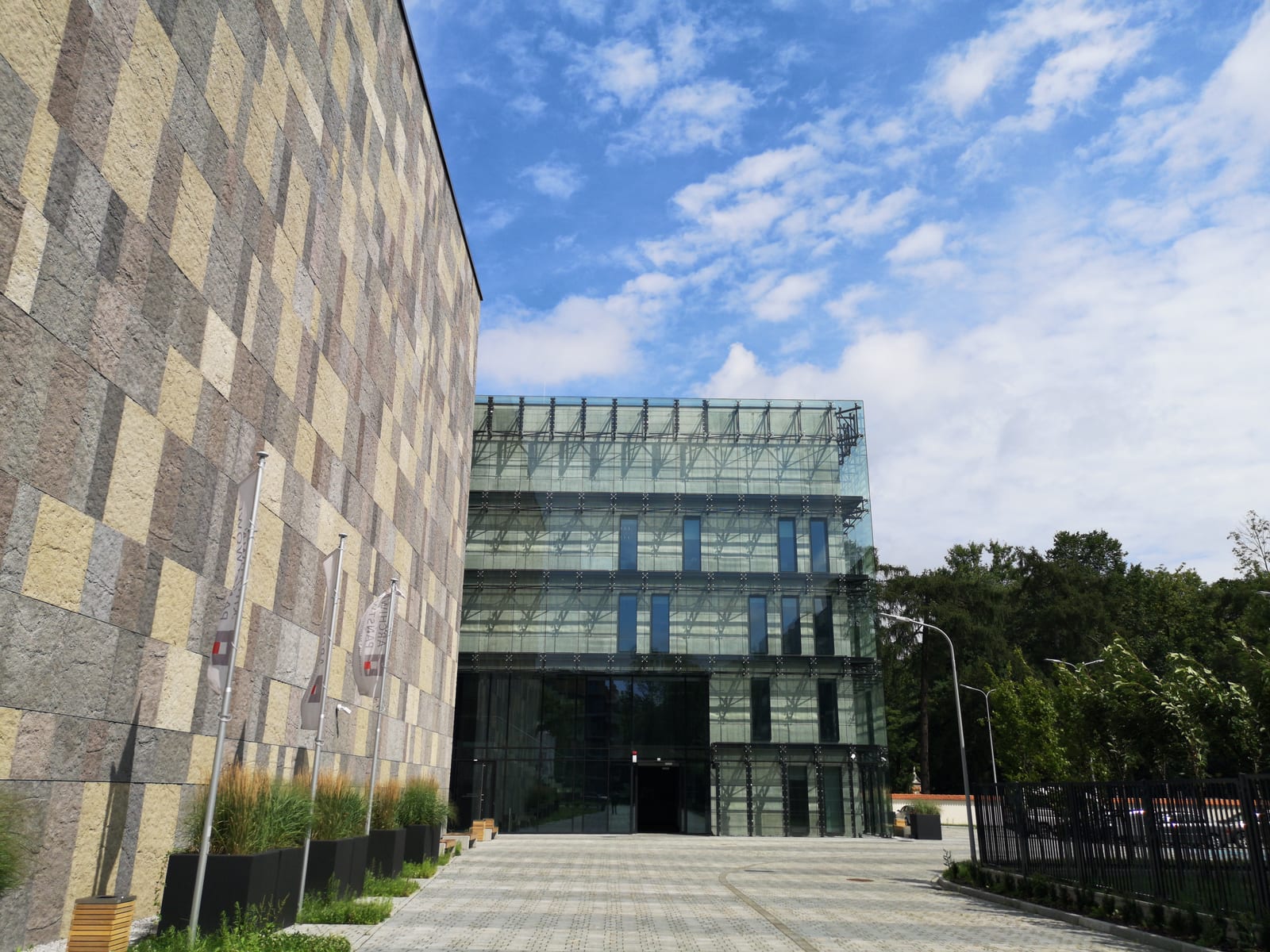
National Archive in Krakow (Archiwum Narodowe w Krakowie)
The largest archive in southern Poland and the holding institution for almost every source we research in the former Western Galicia — parish books, notarial deeds, cadastral maps, voter lists, military files, court books, and magistrate records. Archive number 29.
Read more →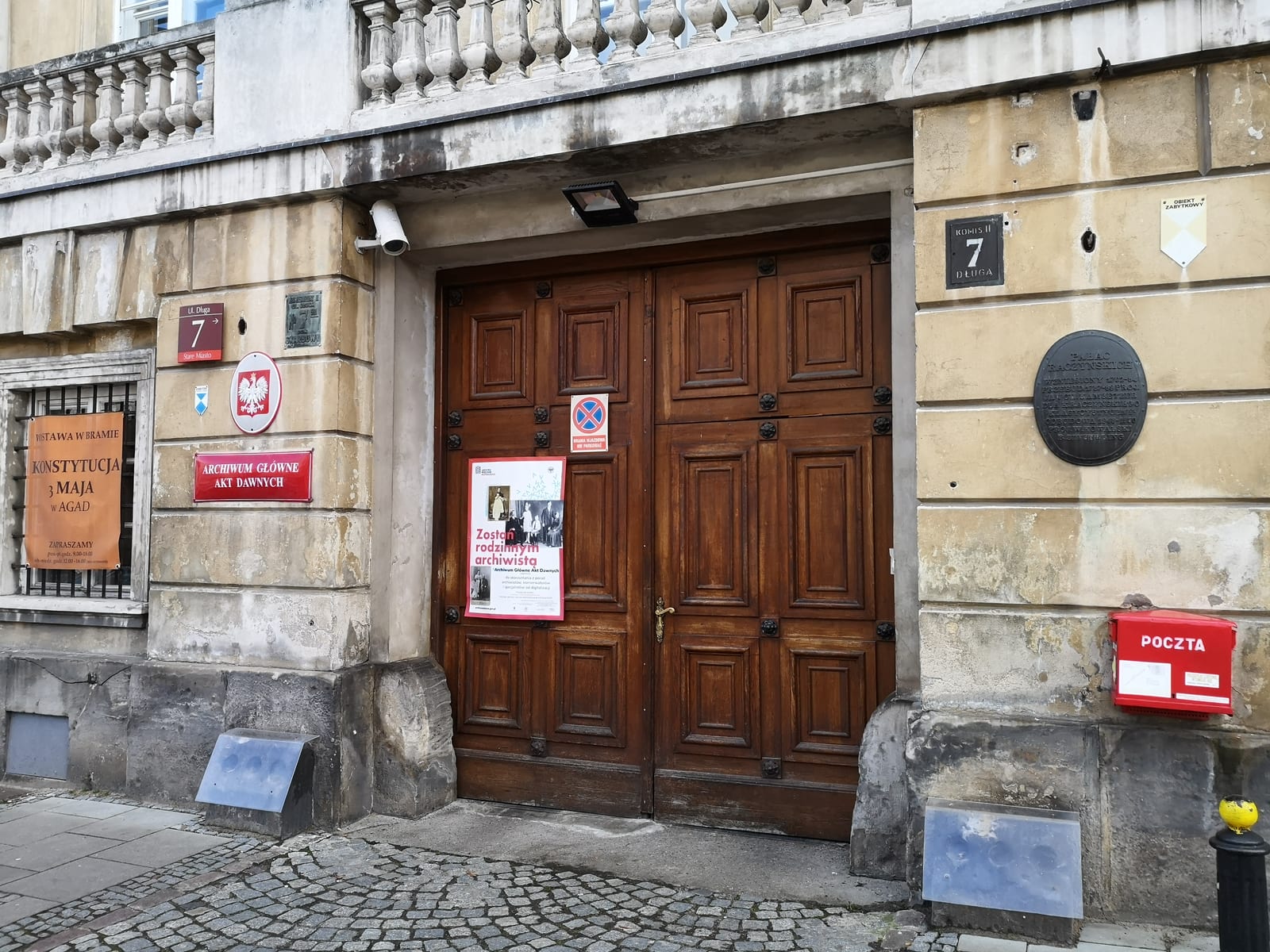
AGAD — Central Archive of Historical Records, Warsaw
The flagship Polish archive for everything pre-1795 — Royal Chancellery registers (Metryka Koronna), castle and land court books, Crown Treasury records, and the foundational sources of Polish nobility research. Archive number 1.
Read more →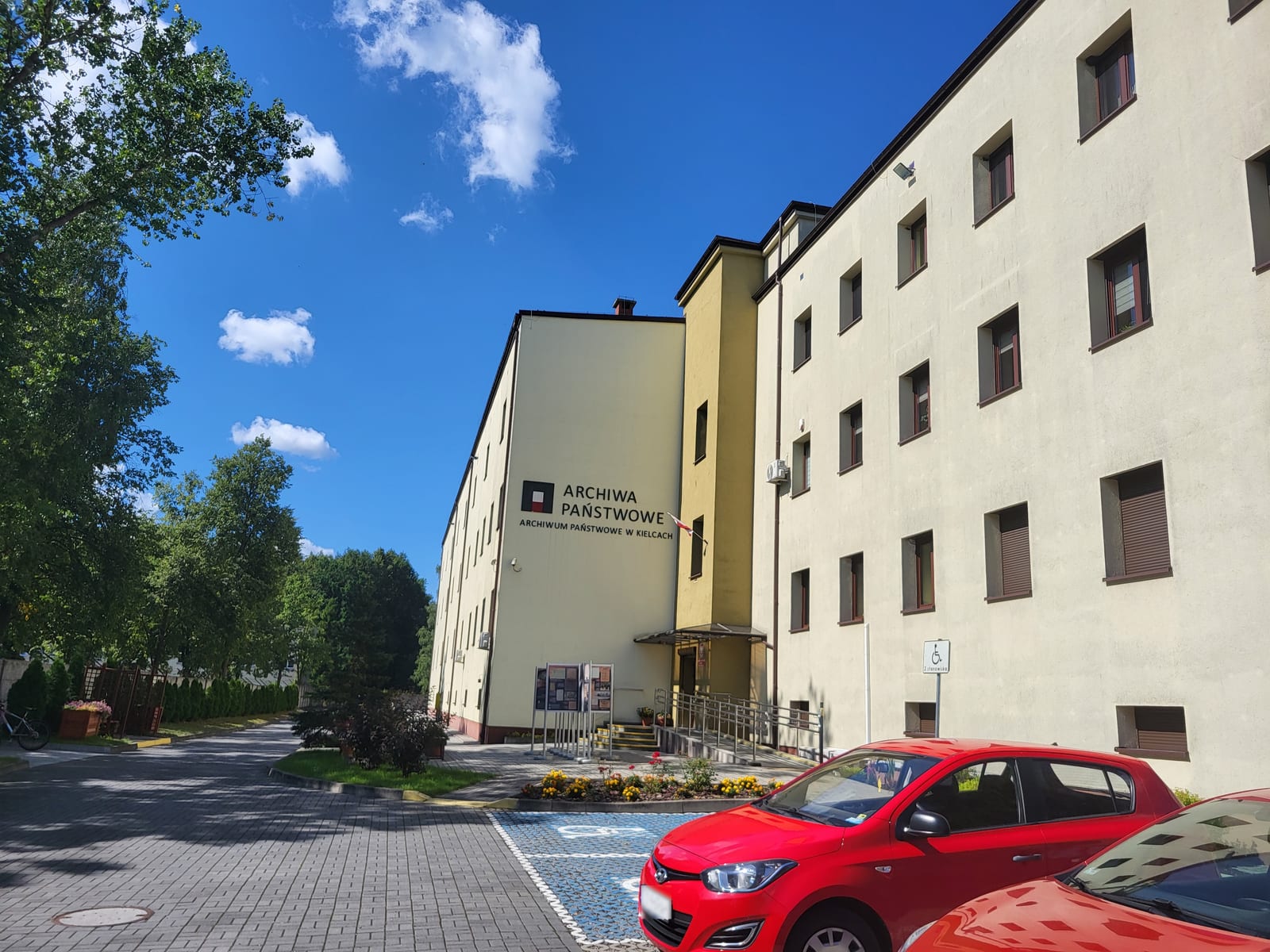
State Archive in Kielce (Archiwum Państwowe w Kielcach)
The principal archive for the former Kielce Governorate and Sandomierz lands — Russian-partition parish books, notarial deeds, magistrate records, and post-1918 administration files. Archive number 21.
Read more →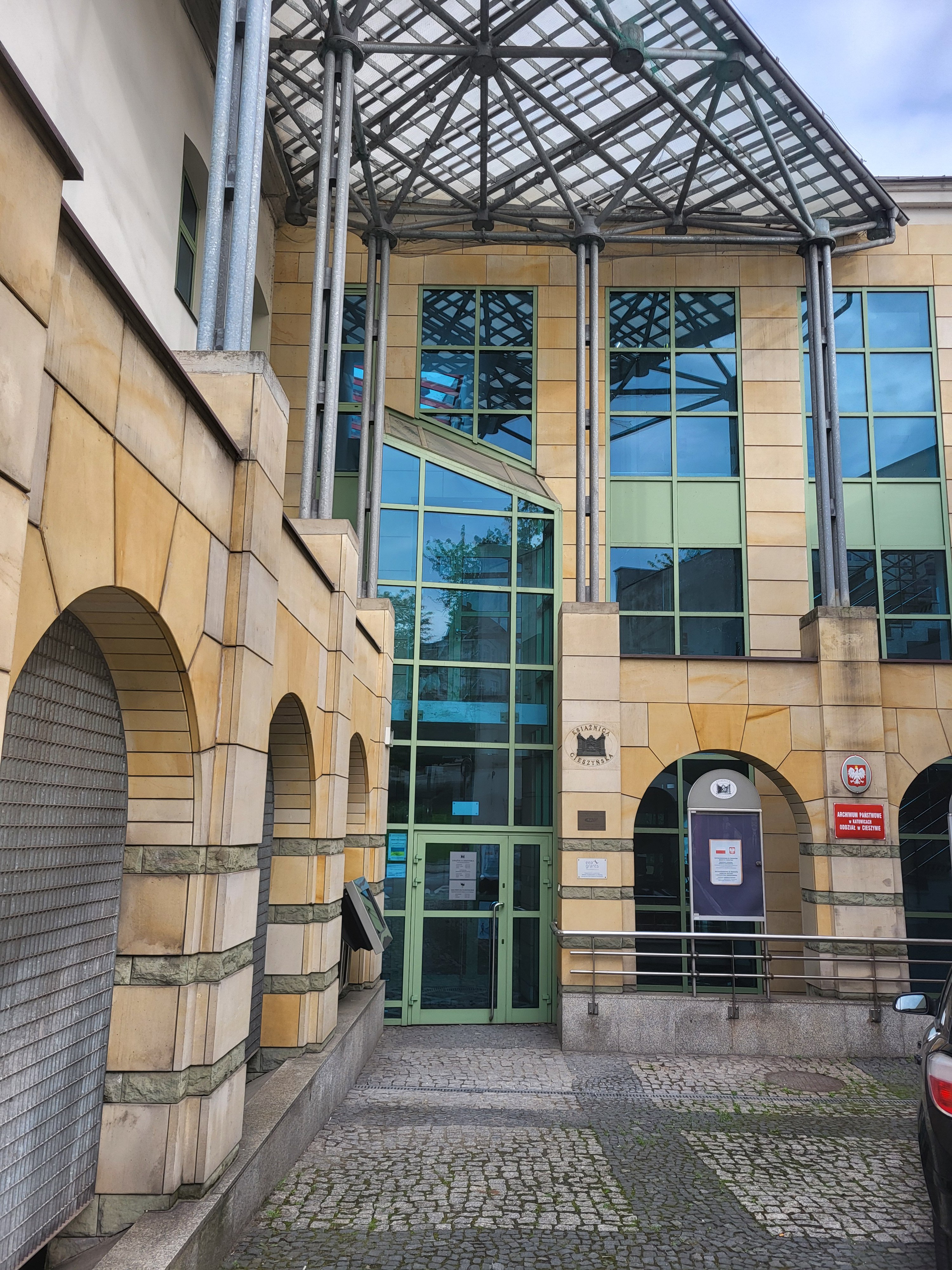
State Archive in Katowice — Cieszyn Branch (Archiwum Państwowe w Katowicach oddział w Cieszynie)
The branch that holds the records of historic Cieszyn Silesia — the former Habsburg Duchy of Teschen. Parish books of every confession, records of the Cieszyn Chamber estate, land and court files, and the largest Protestant parish in Habsburg Poland.
Read more →
Sources specific to the Prussian partition
Standesamt — Prussian civil registry
From 1874, all births, marriages, and deaths in the Prussian partition were recorded by state civil registries (Standesämter) regardless of religion — invaluable for finding both Christian and Jewish ancestors.
Read more →Poznań residents card index (Kartoteka miasta Poznania)
A famous card index of Poznań residents (19th c. to mid-20th c.) — one card per person, recording dates, addresses, religion, and family relationships. Held at the State Archive in Poznań.
Read more →
Sources for Polish citizenship confirmation
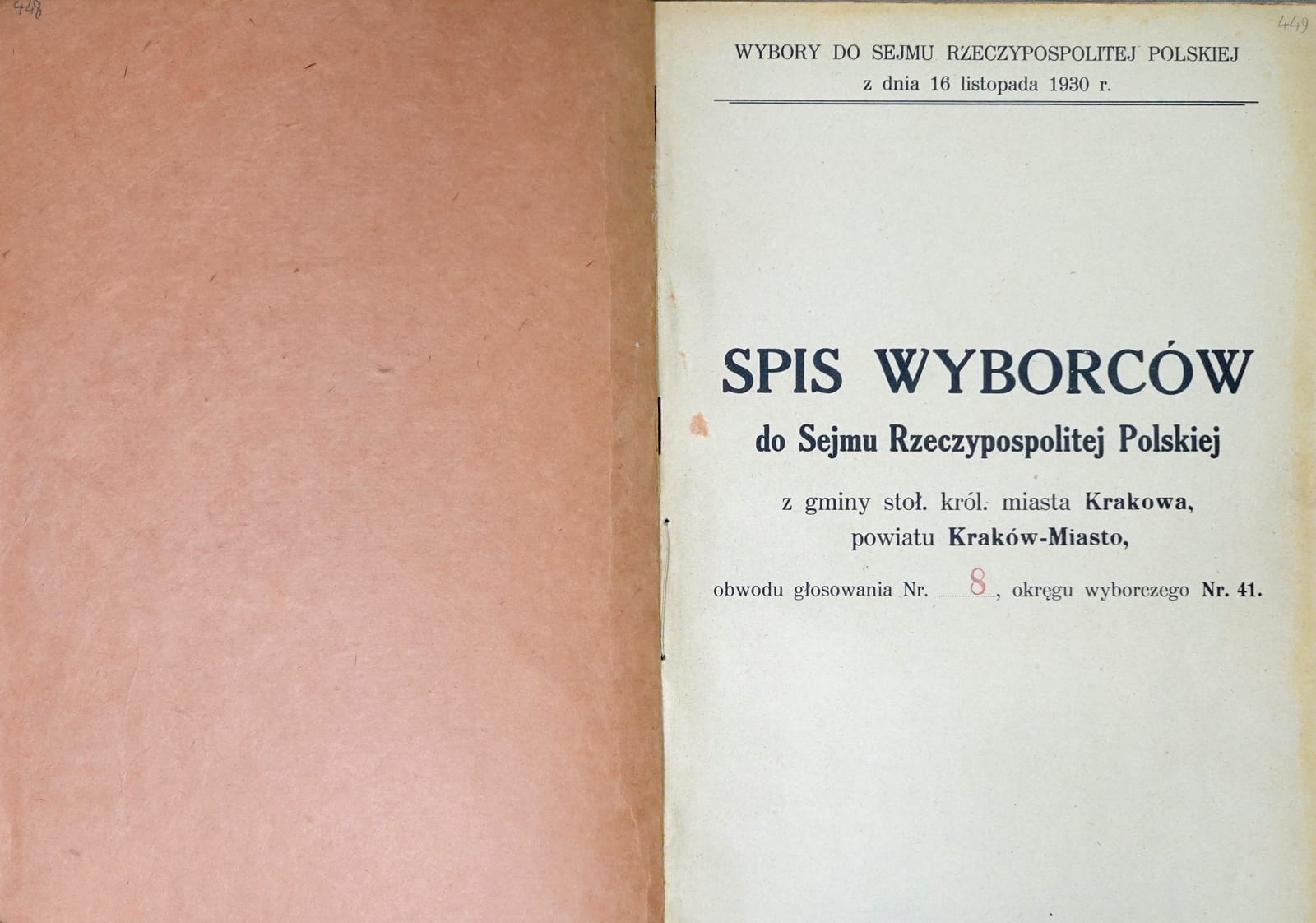
1930 Sejm election voter lists
The November 1930 parliamentary elections produced near-comprehensive voter lists for the entire Second Polish Republic — one of the strongest single proofs of Polish citizenship for confirmation cases today.
Read more →ID card applications (wnioski o dowód osobisty)
Polish ID card applications (from the 1950s onward) contain a photograph, place and date of birth, parents’ names, and prior addresses — one of the best proofs of Polish citizenship for confirmation purposes.
Read more →Residency registers (księgi meldunkowe)
Town and village registration books listing every resident — temporary and permanent — by household. Useful both for general research and as proof of residence in citizenship cases.
Read more →Permanent population books (księgi ludności stałej)
Russian-partition population books listing the permanent residents of a town or village, with multi-generation family entries. Often a critical link in citizenship cases involving the former Russian partition.
Read more →